Service
Resorption Repair
Resorption occurs when the body breaks down parts of a tooth, often without noticeable symptoms in the early stages. Whether due to trauma, orthodontic movement, or infection, timely diagnosis and treatment are vital to preserving the tooth. We specialize in identifying the type and extent of resorption and provide evidence-based treatments to halt its progression. Using advanced technology and specialized protocols, we effectively manage complex resorptive defects and root conditions. Our extensive experience in treating such cases positions us as a leader in resorptive defect management, with a focus on preserving the natural tooth.
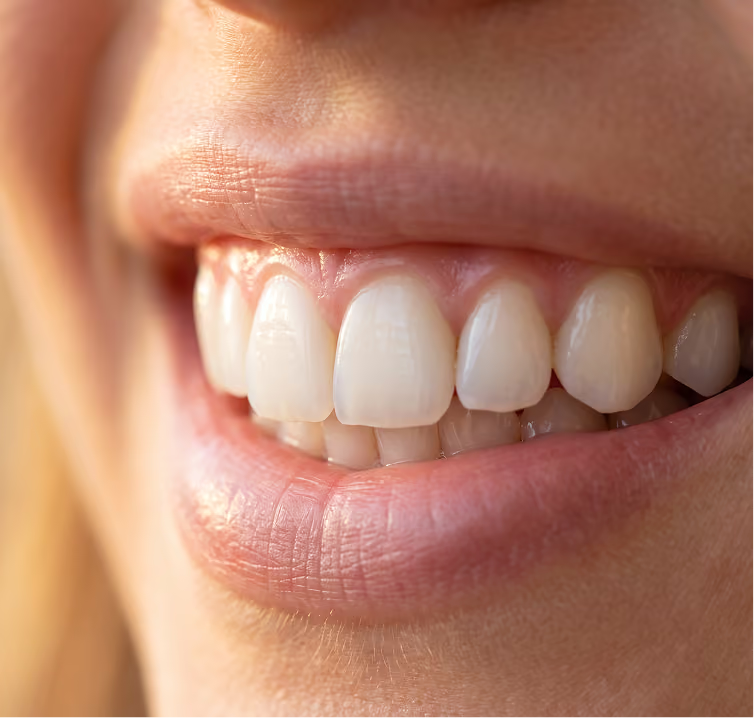
What Is Resorption Repair?
Resorption is a condition where the body’s own cells begin to break down and dissolve the hard structure of a tooth — either from the inside (internal resorption) or from the outside surface of the root (external resorption). It often occurs silently, without pain or obvious symptoms, and may only be discovered during routine dental imaging.
Internal resorption occurs within the root canal space, where cells begin to erode the walls of the root from within. External resorption occurs on the outer surface of the root, often triggered by trauma, orthodontic forces, infection, or impacted teeth. Both types, if left untreated, can weaken and eventually destroy the tooth. Early detection and specialized treatment are critical to stopping the process and preserving the tooth.
Signs You May Need Resorption Repair
- Pink discoloration of the tooth (a classic sign of internal resorption)
- Resorptive lesion discovered on routine dental X-ray or CBCT scan
- Mild sensitivity or discomfort in an otherwise healthy-looking tooth
- A tooth that becomes slightly mobile without an obvious cause
- History of trauma, orthodontic treatment, or dental surgery in the area
- Infection or abscess near a tooth with no clear decay or fracture
Understanding Resorption Repair
Resorption is fundamentally different from decay. While decay is caused by bacteria dissolving tooth structure from the outside, resorption is caused by the body’s own cells (osteoclasts and odontoclasts) attacking the tooth. This can happen for various reasons: previous trauma that triggered an inflammatory response, orthodontic forces that stressed the root, chronic infection, or sometimes with no identifiable cause.
Treatment depends entirely on the type, location, and extent of the resorption. Internal resorption is typically treated through root canal therapy, where the resorptive cells are removed and the damaged area is repaired with biocompatible material. External resorption may require surgical access to the affected root surface, removal of the resorptive tissue, and repair of the defect. In advanced cases, a combination of non-surgical and surgical approaches may be needed. Dr. Monempour’s extensive experience with resorption cases — including complex presentations that many endodontists rarely encounter — allows us to develop precise treatment plans tailored to each patient’s unique situation.
When Do I Need Resorption Repair?
If your dentist has identified a resorptive defect on imaging, or if you notice a pink spot on a tooth, prompt evaluation by an endodontist is essential. Resorption does not stop on its own — without treatment, it will continue to progressively weaken and destroy the tooth.
The earlier resorption is detected and treated, the more tooth structure can be preserved and the better the long-term prognosis. At Monempour Endodontics, we have the specialized expertise and advanced technology to accurately diagnose the type and extent of resorption and deliver targeted treatment to save your tooth. Contact us for an evaluation.
The Treatment Process
What to Expect
Advanced Imaging & Classification
3D CBCT imaging is used to precisely identify the type (internal vs. external), location, and extent of the resorption to determine the optimal treatment approach.
Treatment Planning
Based on the imaging findings, Dr. Monempour develops a personalized treatment plan — which may involve non-surgical root canal therapy, surgical access, or a combined approach.
Targeted Treatment
Resorptive tissue is carefully removed and the defect is repaired using biocompatible materials. Surgical microscopy ensures precision and minimal disruption to healthy tissue.
Monitoring & Follow-Up
Regular follow-up imaging confirms that the resorption has been arrested and the tooth is healing properly. Ongoing monitoring is important to ensure long-term stability.
The Monempour Difference
Our Approach to Resorption Repair
Leader in Resorption Management: Our extensive experience treating both internal and external resorption — including advanced and complex cases — positions us as a leader in the field. We regularly manage conditions that many endodontists encounter only infrequently.
Precise 3D Diagnosis: Accurate classification of resorption type and extent is critical. Our CBCT imaging provides the detailed 3D information needed to develop the most effective treatment plan.
Evidence-Based Treatment: Every treatment decision is guided by the latest research and clinical evidence, ensuring that we use the most effective techniques and materials for each type of resorption.
Natural Tooth Preservation: Preservation of the natural tooth is and will continue to be our priority. We explore every option to stop resorption and save the tooth.
Your Questions Answered
Frequently Asked Questions
We believe that informed patients make the best decisions about their care. Here are answers to common questions about root canal therapy.
Most patients return to normal activities the same day or the next. Some mild soreness is normal and typically resolves within a few days with over-the-counter medication. Dr. Monempour’s team will provide clear aftercare instructions before you leave.
Your general dentist may refer you to an endodontist for complex cases, persistent pain, or when specialized equipment and expertise are needed. As a board-trained endodontist, Dr. Monempour focuses exclusively on diagnosing and treating tooth pain and performing root canal therapy — it's all he does, every day.
You're not alone — and you're in the right place. Our team is experienced in treating anxious patients with patience, clear communication, and a calm environment. We also offer sedation options so you can feel completely at ease throughout your visit.
Yes. We understand that tooth pain doesn't wait, and neither should you. If you're experiencing a dental emergency, call our office and we'll do everything we can to see you the same day.
Your first visit begins with a thorough evaluation, including advanced imaging if needed. Dr. Monempour will take the time to explain your diagnosis clearly, answer all your questions, and outline a treatment plan — with no pressure and no rushing.
Dr. Fred Monempour
Dr. Monempour is a highly experienced endodontist known for his impeccable diagnostic skills, exceptional clinical expertise, and unwavering commitment to patient centered care. He is trusted for performing some of the most complex endodontic cases, combining precision, compassion, and state-of-the-art technology.
What happens after I send my message?
Our front desk will review you information and contact you within 24 hours. If this is an emergency, please call our office.We will accommodate your schedule to set up an appointment in a timely manner.
Address:
433 N Camden Dr
Ste 1100
Beverly Hills, CA 90210
Get Directions