Service
Endodontic Surgery
When a tooth does not respond to conventional root canal treatment, endodontic surgery offers a precise and effective solution to preserve it. Using advanced microsurgical techniques, CT guided therapy, PRP, and lasers, we can remove persistent infection, treat areas inaccessible through non-surgical methods, and obtain better healing. Our goal is always the same - to help retain your natural tooth and restore complete oral health in the most gentle and predictable way possible. Our endodontic microsurgical expertise allows us to manage complex cases that are often considered challenging or non-treatable elsewhere.
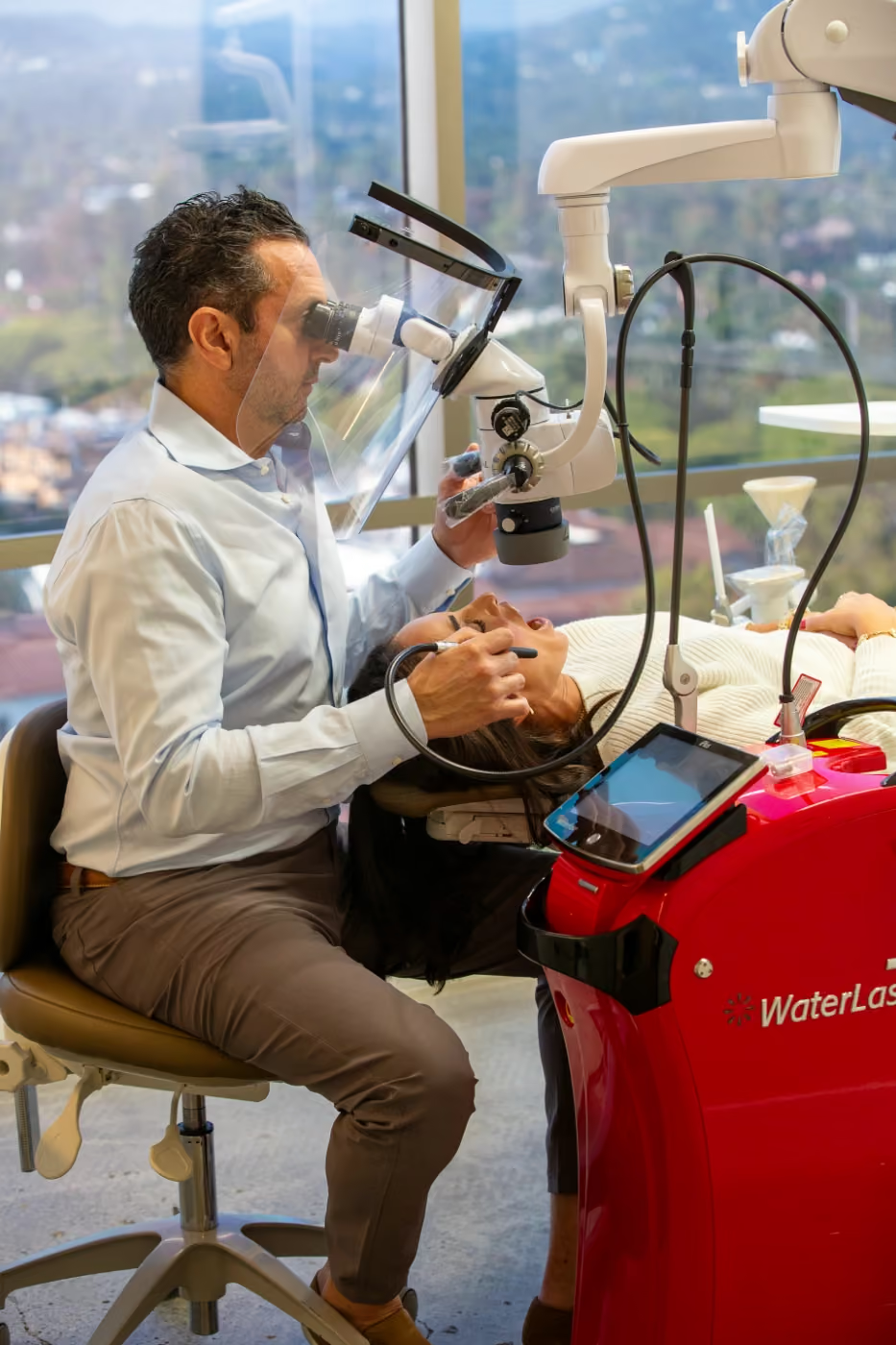
What Is Endodontic Surgery?
Endodontic surgery, most commonly an apicoectomy (root-end surgery), is a microsurgical procedure performed when infection persists at the tip of a tooth’s root despite conventional root canal treatment. During the procedure, a small incision is made in the gum tissue to access the root tip, the infected tissue is removed, the very end of the root is trimmed, and a biocompatible seal is placed to prevent reinfection.
This approach allows us to directly treat the source of infection that cannot be reached through the crown of the tooth. Using surgical microscopes, CT-guided planning, ultrasonic instruments, platelet-rich plasma (PRP) for enhanced healing, and laser-assisted disinfection, modern endodontic surgery is highly precise, minimally invasive, and has excellent success rates.
Signs You May Need Endodontic Surgery
- Persistent infection or symptoms following root canal treatment or retreatment
- A lesion or abscess at the root tip visible on X-ray that hasn’t resolved
- Pain, swelling, or a fistula (gum boil) that returns after treatment
- Calcified canals that cannot be fully treated through conventional root canal
- A post or other restoration preventing retreatment through the crown
- Root damage or anatomy that can only be addressed surgically
Understanding Endodontic Surgery
Endodontic surgery is typically recommended after conventional root canal treatment or retreatment has been attempted but the infection persists. The most common surgical procedure is an apicoectomy, where the endodontist accesses the root tip through the gum tissue rather than through the crown of the tooth.
Modern endodontic microsurgery is vastly different from surgical techniques used decades ago. Using magnification of up to 25x with a surgical microscope, the procedure is incredibly precise. CT-guided planning allows Dr. Monempour to know the exact anatomy before making a single incision. Ultrasonic instruments prepare the root end with minimal tissue removal, PRP promotes faster healing and reduced swelling, and biocompatible materials provide a durable seal at the root tip. The incision is closed with microsurgical sutures for optimal healing. Most patients experience minimal discomfort and swelling.
When Do I Need Endodontic Surgery?
Endodontic surgery is considered when a tooth has persistent infection after root canal treatment and retreatment is not possible or has already been attempted. It’s also indicated when the root anatomy is too complex, calcified, or obstructed to treat from inside the tooth, or when a biopsy of a persistent lesion is needed.
Our microsurgical expertise allows us to manage cases that other practices may consider non-treatable or recommend extraction for. If you’ve been told your tooth can’t be saved, contact Monempour Endodontics for a second opinion — surgery may be the solution that preserves your natural tooth.
The Treatment Process
What to Expect
CT-Guided Planning
Detailed 3D CBCT imaging is used to map the root anatomy, locate the infection, and plan the surgical approach with precision before the procedure begins.
Microsurgical Access
Under local anesthesia, a small incision is made in the gum tissue and the root tip is accessed using microsurgical techniques with minimal tissue disruption.
Infection Removal & Root-End Seal
Infected tissue is removed, the root end is prepared with ultrasonic instruments, laser disinfection is applied, and a biocompatible seal is placed. PRP is applied to promote healing.
Closure & Healing
Microsurgical sutures close the incision for optimal healing. Most patients experience manageable discomfort and return to normal activities within a few days.
The Monempour Difference
Our Approach to Endodontic Surgery
Microsurgical Precision: We use surgical microscopes providing up to 25x magnification, allowing for incredibly precise surgery with minimal tissue disruption and faster healing.
CT-Guided Therapy: Every surgical case is planned using 3D CBCT imaging, so we know the exact anatomy and infection location before making a single incision.
PRP & Laser-Enhanced Healing: Platelet-rich plasma from your own blood promotes faster tissue regeneration and reduced swelling, while laser disinfection provides an additional level of infection control.
Complex Case Expertise: Our microsurgical expertise allows us to treat cases that are often considered challenging or non-treatable elsewhere — helping patients keep teeth that might otherwise be lost.
Your Questions Answered
Frequently Asked Questions
We believe that informed patients make the best decisions about their care. Here are answers to common questions about root canal therapy.
Most patients return to normal activities the same day or the next. Some mild soreness is normal and typically resolves within a few days with over-the-counter medication. Dr. Monempour’s team will provide clear aftercare instructions before you leave.
Your general dentist may refer you to an endodontist for complex cases, persistent pain, or when specialized equipment and expertise are needed. As a board-trained endodontist, Dr. Monempour focuses exclusively on diagnosing and treating tooth pain and performing root canal therapy — it's all he does, every day.
You're not alone — and you're in the right place. Our team is experienced in treating anxious patients with patience, clear communication, and a calm environment. We also offer sedation options so you can feel completely at ease throughout your visit.
Yes. We understand that tooth pain doesn't wait, and neither should you. If you're experiencing a dental emergency, call our office and we'll do everything we can to see you the same day.
Your first visit begins with a thorough evaluation, including advanced imaging if needed. Dr. Monempour will take the time to explain your diagnosis clearly, answer all your questions, and outline a treatment plan — with no pressure and no rushing.
An apicoectomy is a minor surgical procedure that treats infection at the tip of a tooth's root. It's typically recommended when a previous root canal hasn't fully resolved the issue. Dr. Monempour uses microsurgical techniques and advanced imaging to make the procedure precise and minimally invasive.
Dr. Fred Monempour
Dr. Monempour is a highly experienced endodontist known for his impeccable diagnostic skills, exceptional clinical expertise, and unwavering commitment to patient centered care. He is trusted for performing some of the most complex endodontic cases, combining precision, compassion, and state-of-the-art technology.
What happens after I send my message?
Our front desk will review you information and contact you within 24 hours. If this is an emergency, please call our office.We will accommodate your schedule to set up an appointment in a timely manner.
Address:
433 N Camden Dr
Ste 1100
Beverly Hills, CA 90210
Get Directions