Service
Endodontic Retreatment
When a previously treated tooth becomes re-infected, endodontic retreatment may be necessary. Re-infection can occur due to complex root anatomy or missed canals. During retreatment, the original filling is removed, and the canals are re-cleaned and disinfected. We utilize advanced technology to ensure the success of these complex cases and maintain your tooth's health. Our practice specializes in retreatments of failing root canals from other providers and has a strong track record of success with thorough follow-up care.
What Is Endodontic Retreatment?
Endodontic retreatment is a procedure to save a tooth that has had a previous root canal but has developed a new infection or failed to heal properly. During retreatment, the existing root canal filling material is carefully removed, the canals are re-accessed, and the entire root canal system is re-cleaned, re-shaped, and re-disinfected before being sealed again with new biocompatible material.
Re-infection can occur for several reasons: complex root anatomy with curved or branching canals that were difficult to fully clean the first time, canals that were missed during the initial treatment, inadequate sealing that allowed bacteria to re-enter, new decay compromising the tooth’s seal, or a crack in the tooth. Retreatment addresses these issues by providing a more thorough cleaning with advanced technology that may not have been available during the original treatment.
Signs You May Need Endodontic Retreatment
- Pain or sensitivity returning months or years after a root canal
- Swelling near a previously treated tooth
- A pimple-like bump (fistula) on the gums near the treated tooth
- Darkening of a previously treated toothTenderness when biting on a tooth that had a root canal
- New decay or a loose crown on a previously treated tooth
- Infection visible on X-ray around the root tip of a treated tooth
Understanding Endodontic Retreatment
When a root canal fails, it doesn’t mean the original treatment was performed incorrectly. Teeth have incredibly complex internal anatomy — some roots have multiple canals, curved pathways, or microscopic branches that can harbor bacteria even after thorough treatment. Over time, changes in the tooth (such as new cracks, decay, or a compromised restoration) can allow bacteria to re-enter the canal system.
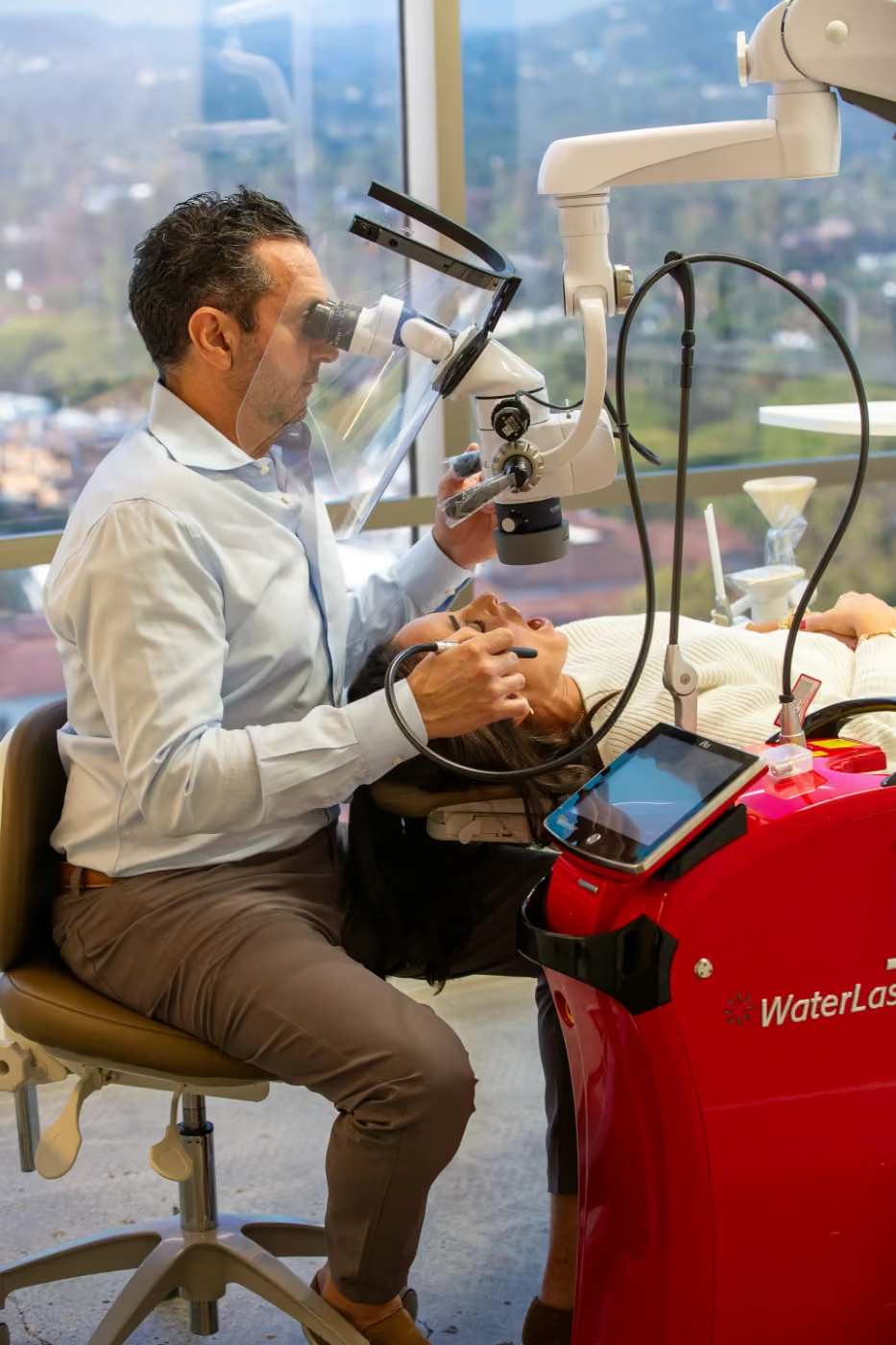
Retreating a tooth is more complex than the initial root canal because the existing filling material must first be carefully removed to regain access to the canals. Dr. Monempour uses high-magnification microscopy and 3D CBCT imaging to identify missed canals, assess complex anatomy, and ensure every canal is thoroughly cleaned. Advanced ultrasonic instruments help remove old filling material without damaging the tooth structure. The canals are then disinfected and sealed with modern biocompatible materials to give the tooth the best chance of long-term success.
When Do I Need Endodontic Retreatment?
If you’re experiencing recurring symptoms in a tooth that has already had a root canal — such as pain, swelling, sensitivity, or an infection visible on X-ray — retreatment may be necessary. In some cases, your general dentist may identify a problem during a routine check-up before you experience any symptoms.
Retreating a tooth is almost always preferable to extraction. Preserving your natural tooth maintains your bite, protects adjacent teeth, and avoids the cost and complexity of implants or bridges. At Monempour Endodontics, we have extensive experience successfully retreating complex cases that other practices may consider untreatable. Contact us to schedule an evaluation and explore your options.
The Treatment Process
What to Expect
Evaluation & Imaging
Thorough clinical evaluation and 3D CBCT imaging to assess the previous treatment, identify the cause of failure, and determine the best approach for retreatment.
Access & Material Removal
The existing crown or restoration is carefully navigated and the previous root canal filling material is meticulously removed using microscopy and ultrasonic instruments.
Re-Cleaning & Disinfection
All canals, including any previously missed canals, are located, cleaned, shaped, and disinfected using the most advanced techniques and instrumentation.
Sealing & Restoration
The canals are sealed with new biocompatible material, and your dentist restores the tooth with a new crown or filling. We follow up diligently to confirm healing.
The Monempour Difference
Our Approach to Endodontic Retreatment
Expert in Complex Retreatments: We are a go-to practice for failing root canals from other providers, with a long track record of successfully retreating cases that others may consider non-salvageable.
Advanced Technology for Precision: High-magnification microscopy, 3D CBCT imaging, and ultrasonic instruments allow us to locate missed canals, remove old materials safely, and thoroughly clean complex anatomy.
Diligent Follow-Up Protocols: We don’t just treat and forget. Our comprehensive follow-up protocols ensure that the tooth and surrounding structures are healing properly and remain healthy long-term.
Tooth Preservation Priority: Our goal is always to save your natural tooth. We exhaust every option to preserve teeth before considering extraction, using the most advanced materials and techniques available.
Your Questions Answered
Frequently Asked Questions
We believe that informed patients make the best decisions about their care. Here are answers to common questions about root canal therapy.
Most patients return to normal activities the same day or the next. Some mild soreness is normal and typically resolves within a few days with over-the-counter medication. Dr. Monempour’s team will provide clear aftercare instructions before you leave.
Your general dentist may refer you to an endodontist for complex cases, persistent pain, or when specialized equipment and expertise are needed. As a board-trained endodontist, Dr. Monempour focuses exclusively on diagnosing and treating tooth pain and performing root canal therapy — it's all he does, every day.
You're not alone — and you're in the right place. Our team is experienced in treating anxious patients with patience, clear communication, and a calm environment. We also offer sedation options so you can feel completely at ease throughout your visit.
Yes. We understand that tooth pain doesn't wait, and neither should you. If you're experiencing a dental emergency, call our office and we'll do everything we can to see you the same day.
Your first visit begins with a thorough evaluation, including advanced imaging if needed. Dr. Monempour will take the time to explain your diagnosis clearly, answer all your questions, and outline a treatment plan — with no pressure and no rushing.
A root canal treats an infected or inflamed tooth for the first time. Retreatment is performed when a previously treated tooth develops new issues — whether from a missed canal, new decay, or a compromised restoration. Dr. Monempour specializes in complex retreatment cases that other offices may not handle.
Dr. Fred Monempour
Dr. Monempour is a highly experienced endodontist known for his impeccable diagnostic skills, exceptional clinical expertise, and unwavering commitment to patient centered care. He is trusted for performing some of the most complex endodontic cases, combining precision, compassion, and state-of-the-art technology.
What happens after I send my message?
Our front desk will review you information and contact you within 24 hours. If this is an emergency, please call our office.We will accommodate your schedule to set up an appointment in a timely manner.
Address:
433 N Camden Dr
Ste 1100
Beverly Hills, CA 90210
Get Directions